Choosing the right vacuum excavator for your application involves evaluating several factors, including job requirements, site conditions, and logistical needs. Vacuum excavators are versatile machines used for a range of applications, such as utility location, debris removal, and excavation in sensitive areas. The main types of vacuum excavators are trailer-mounted, vac trucks, and truck-mounted units.
Vacuum excavation has emerged as a game-changer in the construction and utility industries, offering a safe, efficient, and environmentally friendly alternative to traditional excavation methods. Whether you’re working on a horizontal directional drilling project, potholing, or any other application that requires precise and non-destructive digging, choosing the right vacuum excavator is crucial.
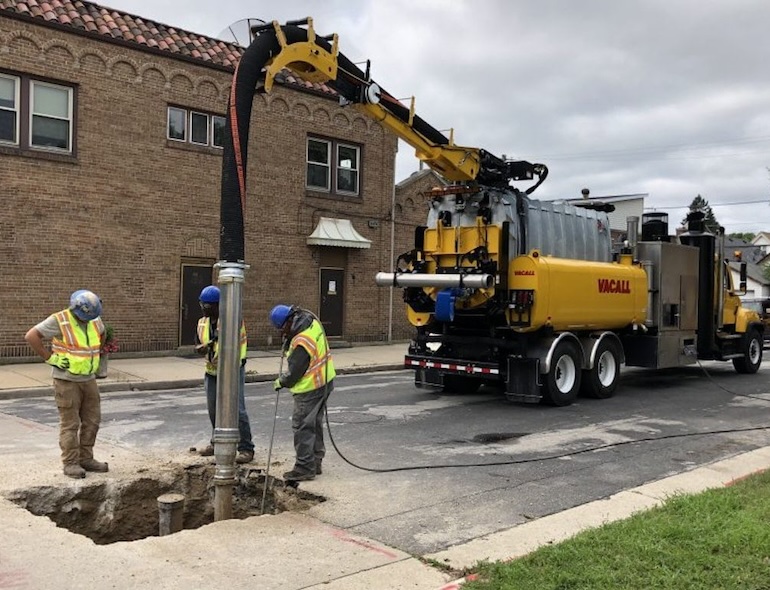
When faced with the task of excavation, especially in areas congested with underground utilities or in environmentally sensitive locations, traditional excavation methods can be risky and inefficient. Enter vacuum excavation, a modern solution that combines precision, safety, and efficiency. In this comprehensive guide, we will explore what vacuum excavation is, how it works, the benefits of using vacuum technology, and how to choose between different types of vacuum excavators for your specific application and tasks.
What is Vacuum Excavation?
Vacuum excavation is a non-destructive digging technique that uses high-powered vacuum systems to safely expose underground utilities, pipelines, and other buried infrastructure.
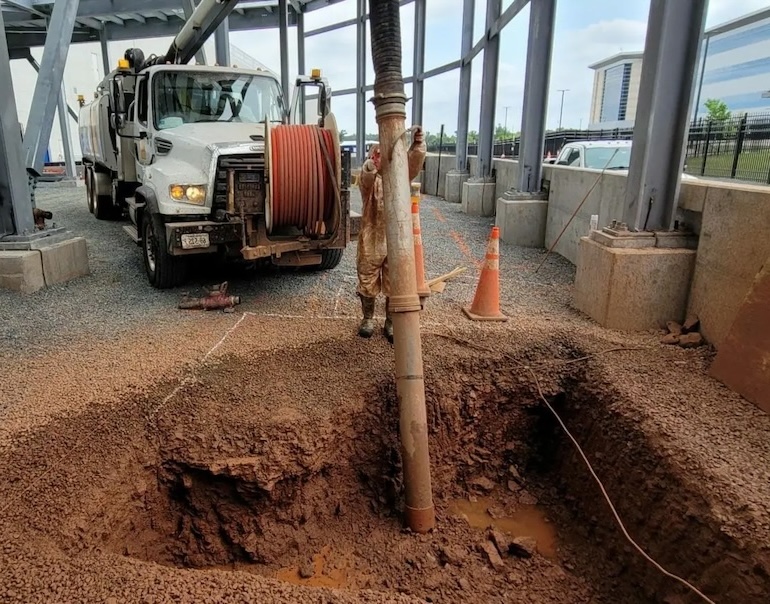
Unlike traditional excavation methods that rely on heavy machinery and manual labor, vacuum excavation employs a combination of air and water to loosen and remove soil, debris, and other materials from the excavation site.
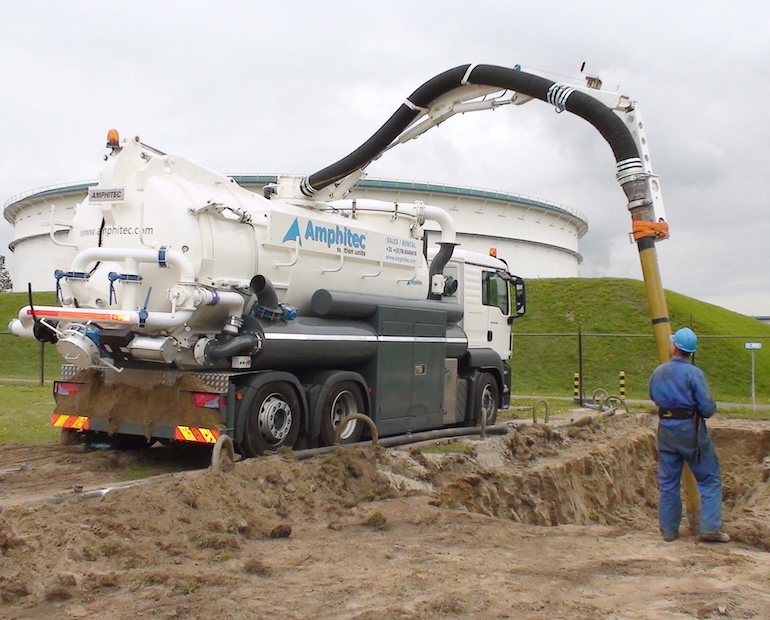
This technique is particularly useful for uncovering underground utilities, performing maintenance work, and digging in tight or sensitive areas without causing damage to existing infrastructure.
How Does Vacuum Excavation Work?
Vacuum excavation operates on a simple yet effective principle. It involves two main components: high-pressure air or water jets (hydro excavation) to loosen the soil and a powerful vacuum system to suck up the loosened material into a debris tank.
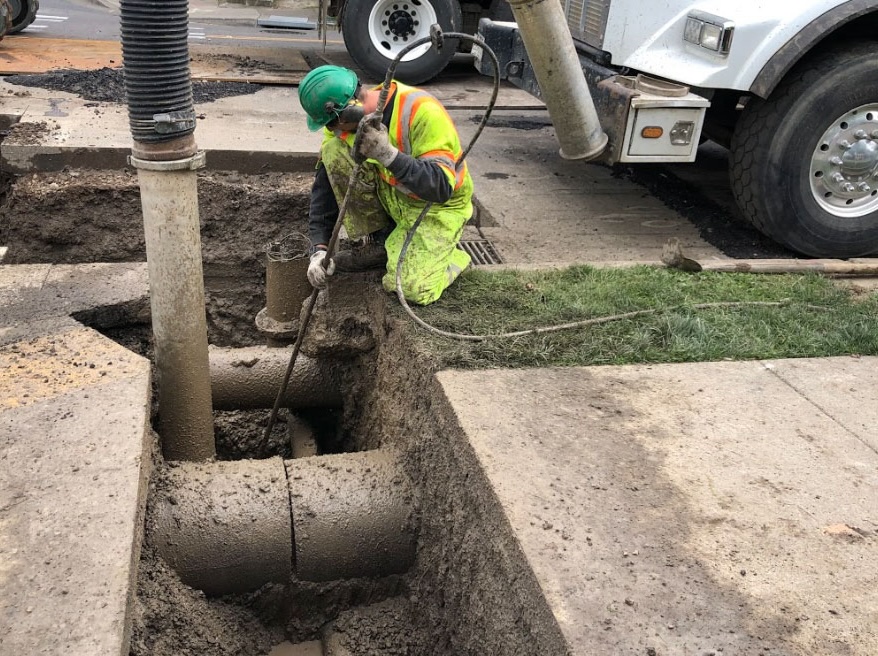
Here’s a step-by-step breakdown of the process:
- Preparation / Setup: The area to be excavated is marked and prepared, ensuring that all necessary safety protocols are followed. The vacuum excavator is positioned near the excavation site, and hoses are extended to the targeted area.
- Loosening the Soil: A high-pressure water jet or air wand is used to loosen the soil and break it up into a slurry.
- Vacuum Extraction: A powerful vacuum system is then used to suction the slurry, safely removing it from the excavation site and depositing it into a debris tank or spoil containment system.
- Utility Exposure: As the soil is removed, buried utilities, pipelines, or other infrastructure are carefully exposed, allowing for inspection, maintenance, or repair work to be performed.
The collected material can later be transported to a disposal site or used as backfill if suitable.
Why Use a Vacuum Excavator?
Vacuum excavation offers numerous advantages over traditional excavation methods, making it an attractive choice for a wide range of applications:
- Safety: By eliminating the need for heavy machinery and manual digging, vacuum excavation significantly reduces the risk of damaging underground utilities, ensuring worker safety, and minimizing potential service disruptions.
- Precision: The controlled and targeted nature of vacuum excavation allows for precise and accurate digging, making it ideal for working in congested areas or around sensitive infrastructure.
- Environmental Friendliness: Vacuum excavation is a low-impact process that minimizes soil disturbance, reduces noise and air pollution, and facilitates easy site restoration.
- Cost-Effectiveness: By reducing the risk of utility strikes and associated fines, as well as minimizing the need for extensive site restoration, vacuum excavation can save time and money in the long run.
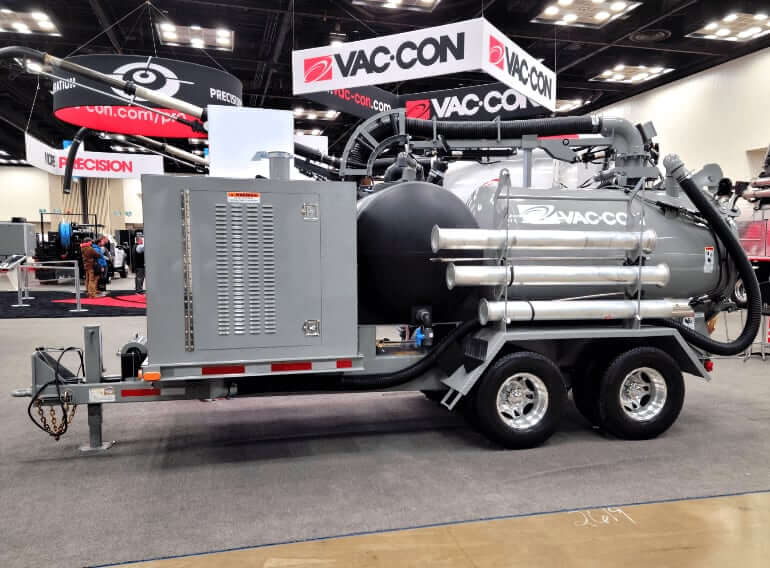
Types of Vacuum Excavators
Vacuum excavators come in various configurations to suit different applications and job site requirements. Choosing the right vacuum excavator depends on the specific needs of your project. There are several types of vacuum excavators to consider:
| Criteria | Trailer Vacuum Excavator | Truck-Mounted Vacuum Excavator |
|---|---|---|
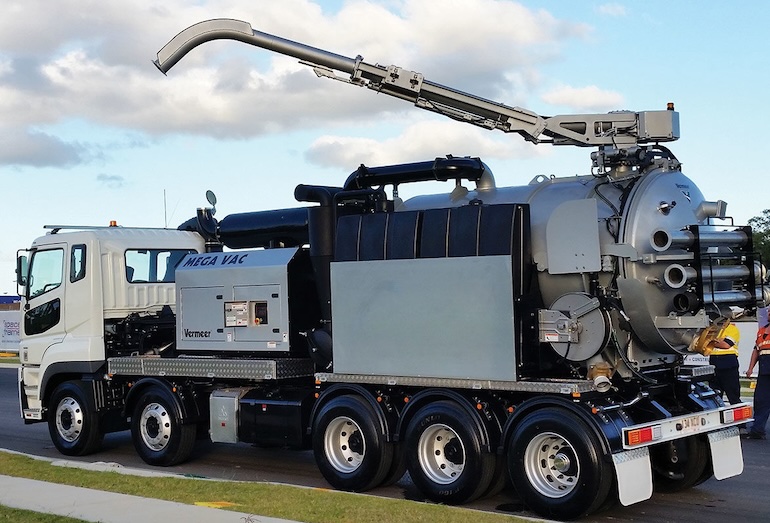
| Desription | Mounted on a trailer and towed by a truck or other vehicle. Offers flexibility in decoupling the hauling vehicle. Typically smaller and more maneuverable. | Built directly onto a truck chassis. Integrated system with powerful engines and larger capacity. |
| Best for | Work in confined or hard-to-access areas. Projects requiring frequent repositioning. Contractor fleets with varied vehicle types | Large excavation projects. Continuous day-long operations. Sites requiring frequent heavy debris removal |
| Pros | Highly mobile on tight job sites. Lower initial equipment cost. Can be towed with existing trucks. Easier to transport when not in use | Quick deployment – no hooking/unhooking. Larger debris tank and stronger vacuum power. Better work accuracy and reliability. Great for high-volume or long-distance jobs |
| Cons | Requires a towing vehicle. Slower repositioning on highways. Can be limited in debris tank size and power | Higher purchase and operating cost. Less maneuverable in tight spaces. Requires larger parking/storage space |
Key Decision Factors
A. Application Type & Job Size
- Small to medium jobs: Trailer units often suffice.
- Large jobs or ongoing utility projects: Truck-mounted units reduce cycle times and downtime.
Examples
- Service potholing, utility locating, small repairs -> Trailer
- Extensive trenching, pipeline exposure, heavy debris -> Truck-Mounted
B. Site Conditions & Accessibility
- Tight spaces (alleys, urban areas, residential lawns): Trailer units win for compact maneuvering.
- Open sites with room to operate: Truck-mounted units maximize efficiency.
C. Power & Capacity Needs
- Tank size: Truck-mounted options usually have larger debris tanks -> fewer dumps.
- Vacuum power: Larger engines and blowers on truck units handle tougher soils and heavy slurry.
D. Transport Logistics
- No dedicated transport: Trailer units use existing vehicles for moving.
- Single integrated vehicle: Truck-mounted units are self-contained → ideal for frequent moves without hooking/unhooking.
E. Budget & Operating Cost
| Criteria | Trailer Vacuum Excavator | Truck-Mounted Vacuum Excavator |
|---|---|---|
| Initial Cost | Lower | Higher |
| Transport Cost | Depends on towing vehicle | Included |
| Fuel Efficiency | Usually better | Depends on truck size |
| Maintenance | Simpler | More complex systems |
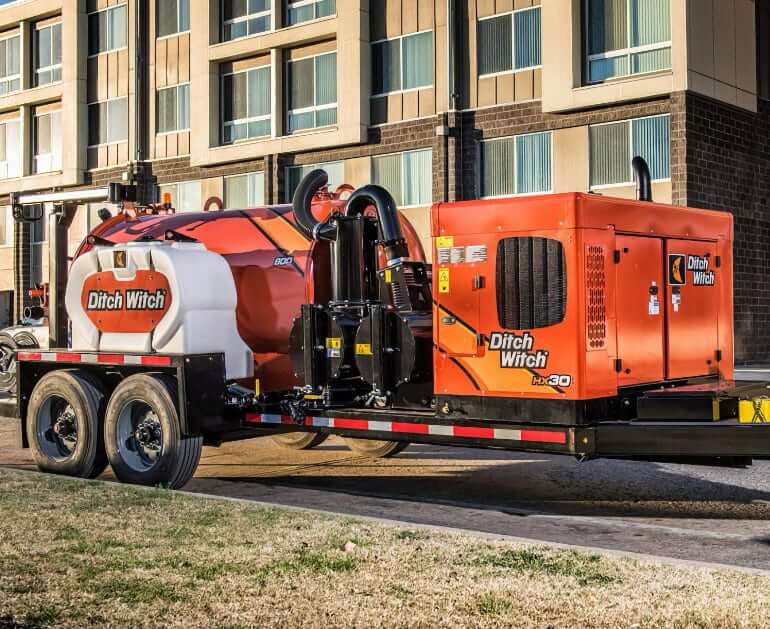
Trailer units can be used with multiple trucks if needed, maximizing asset use. Truck-mounted units are often easier to operate due to integrated controls and systems. Larger truck units may require special permits for road use due to size/weight. Trailer units may avoid some overweight/oversize restrictions.
There’s no one-size-fits-all answer – the “right” choice depends on project scale, site challenges, budget, and operational needs.
Start by answering these core questions:
- How large and frequent are your jobs?
- How important is mobility vs. power?
- What’s your transport capability?
- What’s your budget for purchase and operations?
Quick Decision Checklist
Choose a Trailer Vacuum Excavator if:
- You work in confined or urban areas
- You have existing suitable trucks
- You want lower upfront cost
- Jobs are smaller/frequent moves
Choose a Truck-Mounted Vacuum Excavator if:
- Your projects are large or heavy duty
- You need greater tank capacity
- You want faster job turnaround
- You need integrated, self-contained operation